Interior Rhythm /
The Philosophy of Stillness
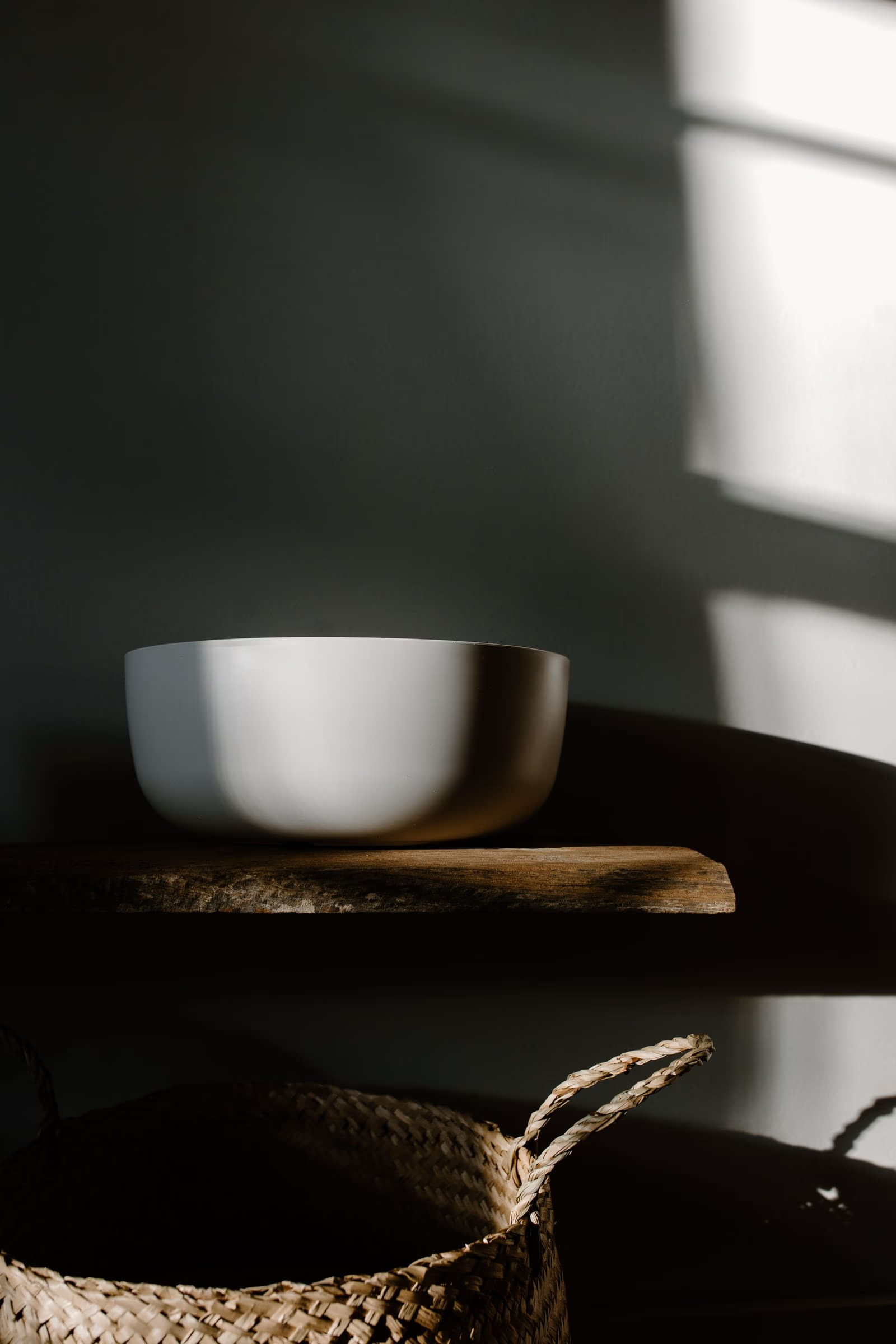
There is a moment in every project where a client asks what goes in the empty part of the room, and the honest answer is nothing. That answer is harder to sell than any piece of furniture.
Emptiness in a room is not an absence of design. It is the most expensive thing in the space, because it is floor area that has been deliberately withheld from use. A room where every surface is occupied gives the eye nowhere to rest, and a room where the eye cannot rest is one people leave without knowing why.
The traditions we draw on understood this as a structural principle rather than a style. The tokonoma alcove exists to hold one object at a time. The Balinese compound organises itself around a courtyard that is, functionally, nothing. In both cases the void is what makes the occupied parts legible.
Practically, this means resisting the instinct to solve a large room by filling it. A 60 square metre living space with two seating groups and a console table reads as smaller than the same room with one seating group and nine metres of clear floor. The second room feels generous. The first feels merely furnished.
The discipline is in holding the line six months after handover, when the temptation to add is strongest. We tell clients that the emptiness is the thing they paid for. Some of them believe us.