Materials /
Embracing Organic Textures
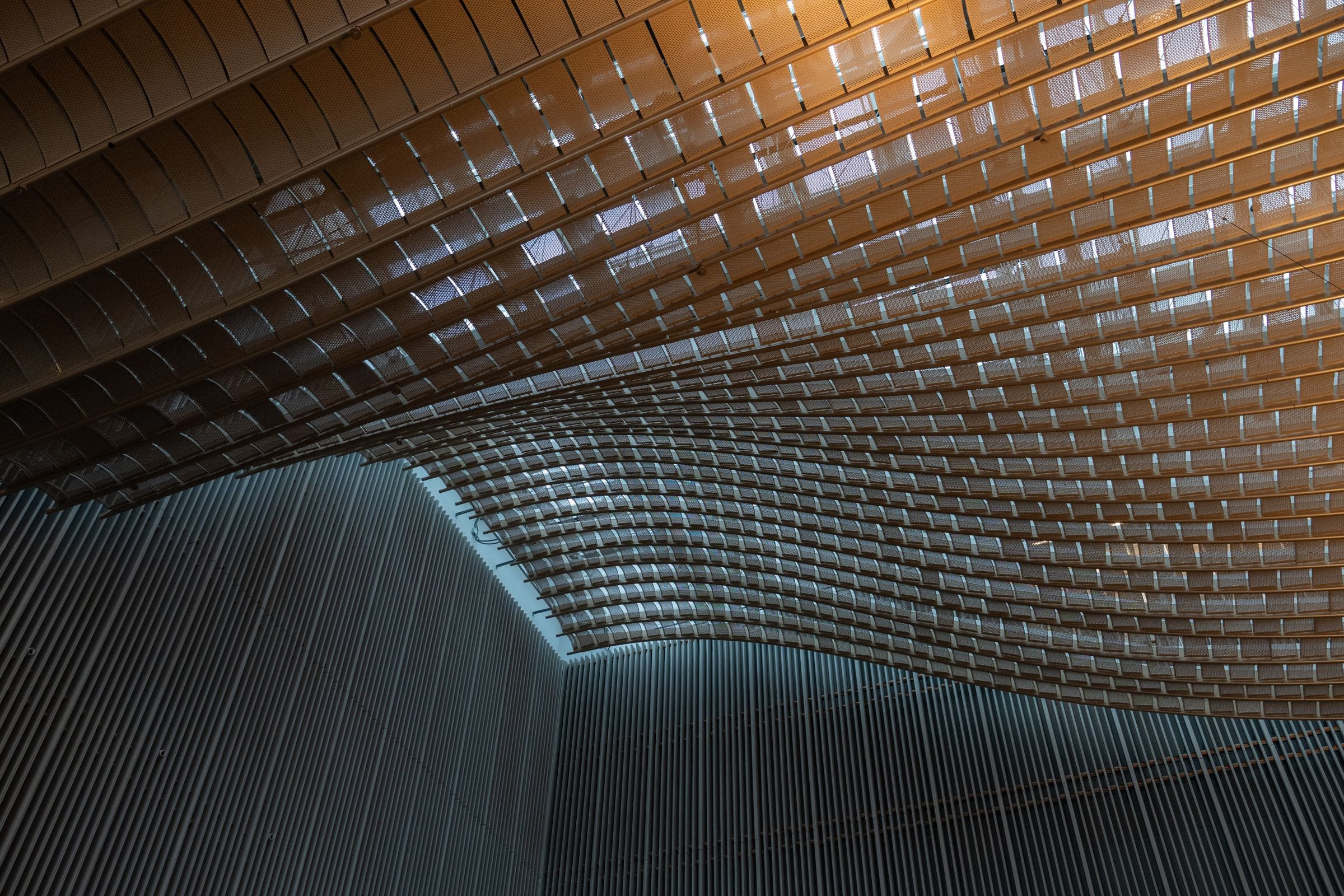
A perfectly flat wall is a manufacturing achievement and a spatial disappointment. It reflects light uniformly, which is another way of saying it tells you nothing about the light falling on it.
Hand-applied finishes behave differently. Lime plaster laid with a trowel holds a variation of perhaps two millimetres across a wall, and that variation is enough to register every change in the light across a day. The wall becomes an instrument for reading the weather.
This is not an argument for rusticity. The tolerance still has to be specified, the substrate still has to be flat, and the difference between a considered irregular finish and a badly executed flat one is entirely visible. Imperfection that has not been designed is just a defect.
Where it matters most is at the point of contact. People touch door handles, worktops, the arms of chairs, and the edges of tables. Those surfaces earn their material honestly — a brass handle that patinates where a hand falls records use in a way a lacquered one never will. We specify unlacquered brass knowing the client will call after four months to say it is changing colour. That call is the point.